MEDIAACADEMY INTERNATIONAL
There is an even larger ambition.
We should not educate people simply to survive the digital world.
We should prepare them to participate in building it.
Africa cannot permanently remain a continent that downloads other people's applications, consumes other people's content, purchases other people's technologies and supplies data to platforms designed elsewhere.
The progression must be deliberate:
Access → Literacy → Competence → Creation → Innovation.
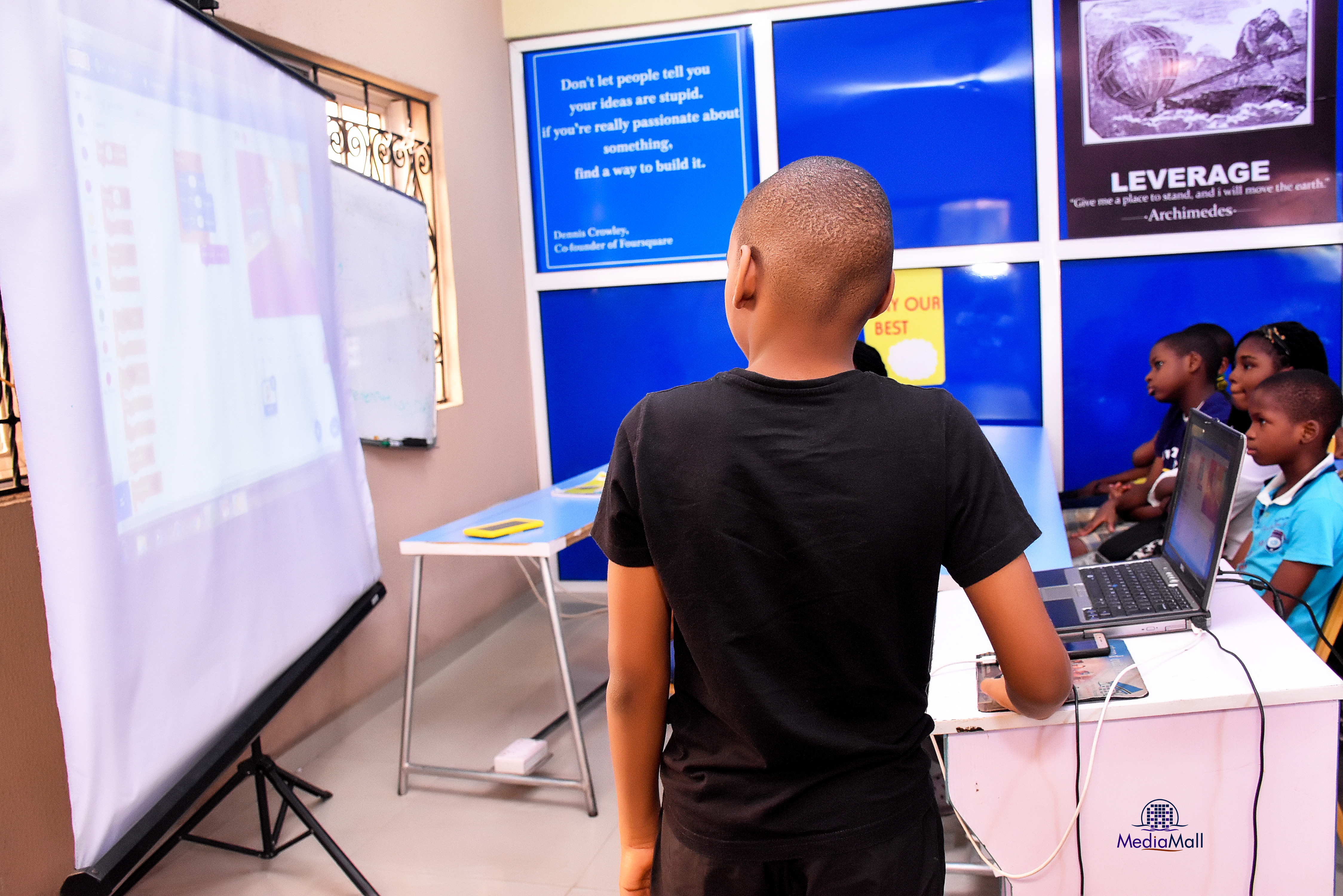
A child who learns basic computer operation today may become tomorrow's software developer.
A trader who learns spreadsheets may eventually build a data-driven enterprise.
A photographer who learns digital editing may become a global content producer.
A young woman introduced to coding may eventually create technology addressing a problem in her community.
A small business that learns digital marketing may suddenly discover customers beyond its physical neighbourhood.
This is why digital literacy should not be understood simply as another training programme.
It is a doorway.
THE REAL DANGER IS NOT TECHNOLOGY
People often ask whether artificial intelligence will take their jobs.
There is a more immediate question:
What happens when someone who knows how to use technology competes with someone who refuses to learn it?
Technology does not distribute its advantages equally.
People who possess the knowledge, confidence and infrastructure to use new tools tend to capture opportunities earlier. Those without those advantages risk falling progressively further behind.
The result can become circular:
Low income restricts access to devices.
Limited access restricts practice.
Limited practice produces weak skills.
Weak skills restrict employment and entrepreneurship.
Restricted economic opportunities reinforce low income.
That is the digital illiteracy trap.
Breaking it requires intervention at every point: affordable connectivity, devices, education, relevant training, supportive policy and—most importantly—opportunities to practise technology in meaningful contexts.
The World Bank's experience in Africa provides evidence that this can work. Digital-skills initiatives supported by the Bank have reported substantial improvements in basic digital capability and, in some programmes, improved income-generating and employment opportunities for participating women.
NOBODY SHOULD BE TOO OLD, TOO POOR OR TOO EDUCATED TO LEARN
Perhaps the most damaging statement anyone can make in this era is:
"I am not a computer person."
You do not have to be.
You simply have to become a person capable of functioning confidently in a world where computers increasingly mediate work, commerce, education, communication and public services.
The digital revolution is not waiting for everybody to become comfortable.
Businesses are digitising.
Governments are digitising.
Banks are digitising.
Schools are digitising.
Artificial intelligence is accelerating the process further.
And the skills threshold for meaningful participation will continue to move.
That means digital literacy cannot be a one-time achievement either.
The competent person of the future will not necessarily be the individual who knows the most today.
It may be the person who has mastered the habit of learning, unlearning and learning again.
THE CHOICE BEFORE US
The world's remaining digital divide cannot be solved simply by distributing smartphones or expanding broadband coverage.
Those interventions are essential, but connectivity without capability can produce millions of people who are technically online yet economically underpowered.
The greater goal must be meaningful digital participation.
A society becomes digitally empowered when its citizens can use technology to learn, earn, communicate, create, solve problems, protect themselves and improve their communities.
That work must begin in schools, but it cannot end there.
It must reach market women and university graduates.
Teachers and technicians.
Entrepreneurs and employees.
Children and retirees.
Rural communities and urban professionals.
Nobody should be written off.
Because the emerging divide will increasingly not be between people who have computers and people who do not.
It will be between people who know what to do with technology and people who remain dependent on those who do.
Escaping digital illiteracy is therefore no longer simply about learning computers.
It is about protecting personal independence, employability and economic relevance.
It is about moving from consuming technology to commanding it.
And ultimately, it is about ensuring that as humanity races deeper into the digital age, no generation and no community is condemned to watch the future happen from the sidelines.
We should not educate people simply to survive the digital world.
We should prepare them to participate in building it.
Africa cannot permanently remain a continent that downloads other people's applications, consumes other people's content, purchases other people's technologies and supplies data to platforms designed elsewhere.
The progression must be deliberate:
Access → Literacy → Competence → Creation → Innovation.
A child who learns basic computer operation today may become tomorrow's software developer.
A trader who learns spreadsheets may eventually build a data-driven enterprise.
A photographer who learns digital editing may become a global content producer.
A young woman introduced to coding may eventually create technology addressing a problem in her community.
A small business that learns digital marketing may suddenly discover customers beyond its physical neighbourhood.
This is why digital literacy should not be understood simply as another training programme.
It is a doorway.
THE REAL DANGER IS NOT TECHNOLOGY
People often ask whether artificial intelligence will take their jobs.
There is a more immediate question:
What happens when someone who knows how to use technology competes with someone who refuses to learn it?
Technology does not distribute its advantages equally.
People who possess the knowledge, confidence and infrastructure to use new tools tend to capture opportunities earlier. Those without those advantages risk falling progressively further behind.
The result can become circular:
Low income restricts access to devices.
Limited access restricts practice.
Limited practice produces weak skills.
Weak skills restrict employment and entrepreneurship.
Restricted economic opportunities reinforce low income.
That is the digital illiteracy trap.
Breaking it requires intervention at every point: affordable connectivity, devices, education, relevant training, supportive policy and—most importantly—opportunities to practise technology in meaningful contexts.
The World Bank's experience in Africa provides evidence that this can work. Digital-skills initiatives supported by the Bank have reported substantial improvements in basic digital capability and, in some programmes, improved income-generating and employment opportunities for participating women.
NOBODY SHOULD BE TOO OLD, TOO POOR OR TOO EDUCATED TO LEARN
Perhaps the most damaging statement anyone can make in this era is:
"I am not a computer person."
You do not have to be.
You simply have to become a person capable of functioning confidently in a world where computers increasingly mediate work, commerce, education, communication and public services.
The digital revolution is not waiting for everybody to become comfortable.
Businesses are digitising.
Governments are digitising.
Banks are digitising.
Schools are digitising.
Artificial intelligence is accelerating the process further.
And the skills threshold for meaningful participation will continue to move.
That means digital literacy cannot be a one-time achievement either.
The competent person of the future will not necessarily be the individual who knows the most today.
It may be the person who has mastered the habit of learning, unlearning and learning again.
THE CHOICE BEFORE US
The world's remaining digital divide cannot be solved simply by distributing smartphones or expanding broadband coverage.
Those interventions are essential, but connectivity without capability can produce millions of people who are technically online yet economically underpowered.
The greater goal must be meaningful digital participation.
A society becomes digitally empowered when its citizens can use technology to learn, earn, communicate, create, solve problems, protect themselves and improve their communities.
That work must begin in schools, but it cannot end there.
It must reach market women and university graduates.
Teachers and technicians.
Entrepreneurs and employees.
Children and retirees.
Rural communities and urban professionals.
Nobody should be written off.
Because the emerging divide will increasingly not be between people who have computers and people who do not.
It will be between people who know what to do with technology and people who remain dependent on those who do.
Escaping digital illiteracy is therefore no longer simply about learning computers.
It is about protecting personal independence, employability and economic relevance.
It is about moving from consuming technology to commanding it.
And ultimately, it is about ensuring that as humanity races deeper into the digital age, no generation and no community is condemned to watch the future happen from the sidelines.